Let me tell you about the first time I saw Fairchild.
I was working at Papa John’s — the day shift. I had just moved back to Athens after a blurred year away, and it was the first job I found. It was terrible money, and ultimately destroyed my car at the time — but hey, free pizza.
One of the big tasks that I had to do everyday, was food prep. All of the various pizza ingredients had to be carted out of the walk-in freezer. The cheese had to be fluffed [no-shit technical term], the meats had to be sorted — and all of the vegetables needed to be prepped fresh each day. The tomatoes were chopped, the onions were diced [pure misery], everything sliced and prepped with a big steel knife.
I hated it, but in a mute sort of way. It was systematic and mindless. Plenty of time to plot my escape, or let my mind wander.
For some reason, I really did enjoy cutting up the green bell peppers.
For the uninitiated, here’s the process. You cut off the cap [stem part] with a knife, then scoop out the seeds and guts inside. Then you would toss the whole thing into a big chopper with a crank, a few spins and out would come eviscerated vegetable.
It’s hard to explain exactly what I enjoyed about it. Other than the wanton destruction. The peppers were always nice and cool, and pleasantly crisp when you sliced into them. It was neat and self-contained, a little green world — protected by a thick barrier. Chop up onions, you get more onions — chop up a green pepper, you are Galactus.
One day I cut the top off of a bell pepper, and found something new.
Fairchild.
The pepper looked completely normal on the outside, maybe just a little twisty at the bottom — but inside was a tiny green growth, a nub of another pepper growing inside. It was a much brighter green then its host, almost fluorescent green, twisted and strange growing in the center of things.
My immediate thought : “This is what cancer is.”
Because it wasn’t a blight, or a bug — it was something that grew from within the little world, innocent and merry and green, green, green. All it wanted was to grow, and was blithely unconcerned with what that meant for rest of the pepper.
I’ve scanned the internet for a good picture of one of these things, and I absolutely cannot find one suitably impressive.
This is a red pepper, but you get the idea.
It was just so pleased with itself — that’s what struck me. So vibrant and wicked and sure of itself – it almost waved in delight to be discovered.
Look what I am doing, it said. It’s so very nice inside of here, would you like to pull up a chair? Things are going so well!
That image sticks with me. And so when it was time to create a villain for the last act of Lodestar — the green, green cancer sauntered into my mind, as blithe and merry as ever. A devil, a prince of devils dreaming of being King. A trickster and a manipulator — one so very, very sure of his success. Fairchild, the King of Glass. He had appeared in bit parts in other stories, but it was time for him to take center stage.
And if the heroes of Aufero aren’t most clever and potent, he will sit on the throne of my little world until the end of days.
But even if they succeed, I know the image of the green pepper in my mind will survive — so Fairchild will too.
A short story that features my green devil – The Cost – if you care to peruse.
The heat of her day, and the hat on her head, and the crease of her waist and the slight boredom in her green-green eyes.
I thump down on the strings and an eruption of trees – pines today. Green like her eyes, but I place them outside her reach with petty twangs. She spins faster, catching the rhythm. A few coins clatter. It’s hot.
I throw gold notes at her feet, but her steps erase them – Nena the Cruel, the Cat Dancing. Give her a heart, and she will return a hard-scrabble scrap rat-tat-rattling around your rib cage.
She makes the devil jealous. The sun weep.
I fill the plaza with water, my fingers on the strings. She steps onto the waves like a birthright, her hem dry.
The crowds pass, but they do not see. This marble and stone corner of the world full of spite and spiders — full of amaranth and ambrosia. At the end of the day I will slide my hand under her elbow, and she will jerk it away. My desire-sweat drips, and she kills me again with green-green daggers.
I bring a spirit of fire into the forest, I build a wall of earth — it is never enough to hold her. A snake winds around the base of my spine and I want her and want her. I scream down into my hands, and the strings do their best to answer.
Those are the two driving forces, theinspirado of a grand bulk of the genre. Either the writer has a really neat system of magic, combat or dragon-sex and they hammer a plot and some characters into a framework to hold it — OR the writer has a really neat world, or character, or setting for dragon-sex and they hammer a plot and some less interesting characters into a framework to hold it.
I’m not really complaining that these forces exist. [Especially about the dragon-sex.] I’ve invested a massive amount of geek-hours into consuming as much of this content as I can, and I never plan to stop. My complaint derives from the endless mimicry, and the bone-certain belief that these two masters are the only ones that the genre can serve.
That is not the case, more on that shortly. But first, a primer.
In general, there are two types of fantasy authors. Nerds and Dungeon Masters.
Nerds love their shining rules, and Dungeon Masters love their precious backstory.
So when you are reading a fantasy novel and realize you’ve just spent two pages reading about how Flame-aligned Slaughter Wizards cannot use their Flambe attack when Ice-aligned Tempest Mages have spent a fortnight attuning their Ava-crystals to the Fourteenth Ley Line —- then the author is a Nerd.
“Well, they can’t.”
Uh, thanks Mr. Sanderson.
And when you finish a blistering passage on the Archduke Sargasso and the five-year conflict he endured developing the Draconian Congress, including the Riddle-Game played in the jaws of Tyrinel the Inferno, Red Dragon Lord – with exacting minutes provided, including three water breaks and a complete rundown of the Inaugural Dylithic Council’s attire, facial hair and a five stanza limerick sung by Jargon the Time-Sworder — ALL of this read by the protagonist on a discarded scroll in the waiting room of his dentist’s office. Then, my friend, your author is a Dungeon Master.
“Roll versus Total Despair, bitches.”
Both of these ideas sound pretty awesome, and both of the authors above are titanium-plated awesome. There’s nothing wrong with either approach, and in a skilled scribe’s meaty grip each style can keep you patently enthralled. I’ve spent more than a few minutes thinking about everyday applications of Allomancy from Sanderson’s Mistborn series — and you better believe I’m far more concerned about the fate of the Iron Throne of Westeros than the outcome of the 2012 Presidential Race.
Democracy in action.
This isn’t about what those authors have already written. It’s about the fantasy that hasn’t been written yet.
The fantasy that you and I are writing. The new fantasy, which is also old fantasy — as opposed to the middle fantasy that we’re currently sitting in. The new/old fantasy where we basically don’t give a shit.
What am I talking about?
Swordpunk.
I have chosen this term because:
a) It sounds cool.
b) Fuck you, that’s why.
Are there rules? Yes, of course. But they are to be like a kindly sour-smelling uncle. You send them a card on their birthday, a sincere hug at Christmas — but you’re not inviting them over when it’s time to party.
Is there backstory? As long as there is linear time there shall be Stuff That Happened Before. But we shouldn’t drag it with us like those creepy dudes wearing their high school letter jacket to English 101. Leave that shit behind.
Not wearing pants.
And world building? Of course, building your own little bolt-hole from reality is the bleedin’ point. But why do we need to reinvent the wheel every time? Tolkien did it and generations of fantasy writers have been doing their best to ape him ever since. Too many fantasy writers think like Carl Sagan:” If you wish to make an apple pie from scratch, you must first invent the universe”.
How about we just have apple pie? You know, the apple pie that is at the store and we’ve all had it and we all know what it is?
Swordpunk is all about just eating the fucking pie.
I think the fear that fantasy writers have is that if they don’t reinvent the wheel, they won’t be taken seriously. Like Tad Williams is going to roll up and revoke their Fantasy License. [I’m imagining him in a lime green golf cart and wearing a jaunty scarf. Are you imagining it that way? Just me? Okay.]
The worlds are there. The tropes are there. It’s all in how you use them. I think there can be more power in connecting to the old stories, then running down the street and trying to start up your own Disneyland. “Oh, no — this ain’t Mickey Mouse, this is my own character Mouselord McQueen. He’s totally different.”
I don’t want to waste energy convincing you that my world is more clever or more original or ‘waaaaaay fucking different” [WFD] from any other fantasy author’s world. That’s a fool’s errand, and honestly more than a little outside of my skillset.
When I have a hero step forth and raise his sword, I don’t want to try to sell you on how he’s different than the inumerable sword-slingers in the genre. I want you to think of them. I want you to think of Sturm Bright-blade, Simon Mooncalf, Logen the Bloody-Nine, Brienne of Tarth, Lancelot, Garet Jax, Neville Longbottom, Reepicheep, Paksenarrion Dorthansdotter and Conan the Barbarian,
Pictured – License to be snooty and pedantic.
himself. I want you to think of them all. I want to connect to that resonance, that legacy of character.
Is it getting a little Joseph Campbell-y in here?
Beyond that, fantasy needs to be more of a wackadoo fever dream. I want more Fritz Lieber and Michael Moorcock – more Fafhrd and the Grey Mouser, more Elric of Melnibone. Beautiful little offshoots of the genre, grand and strange, bizarre and gleefully weird.
That’s what I’m trying to do at least, with Spell/Sword, my first novel. And if I can keep going, I’ll keep trying.
My book has rules. My book has backstory. [Shit, you better bring some Post-It Notes, dog.] I’m a Nerd and a Dungeon Master, just like all of you.
But thinking about these things, and giving them a silly name made me feel free. It made me feel empowered, it made me write the book I wanted to write — not the one that I thought would ever sell.
I hope it makes you feel the same.
Swordpunk
1. Eating the pie is more fun than making the pie.
2. No one cares about about your character’s grandfather.
3. Only trot out the Rules on special occasions.
4. Don’t let anyone tell you how to make your art. Make it. Make it scream and bleed, make it shine and shatter. Be true to the moment, to the beauty of it — and make no excuses for putting it on the page.
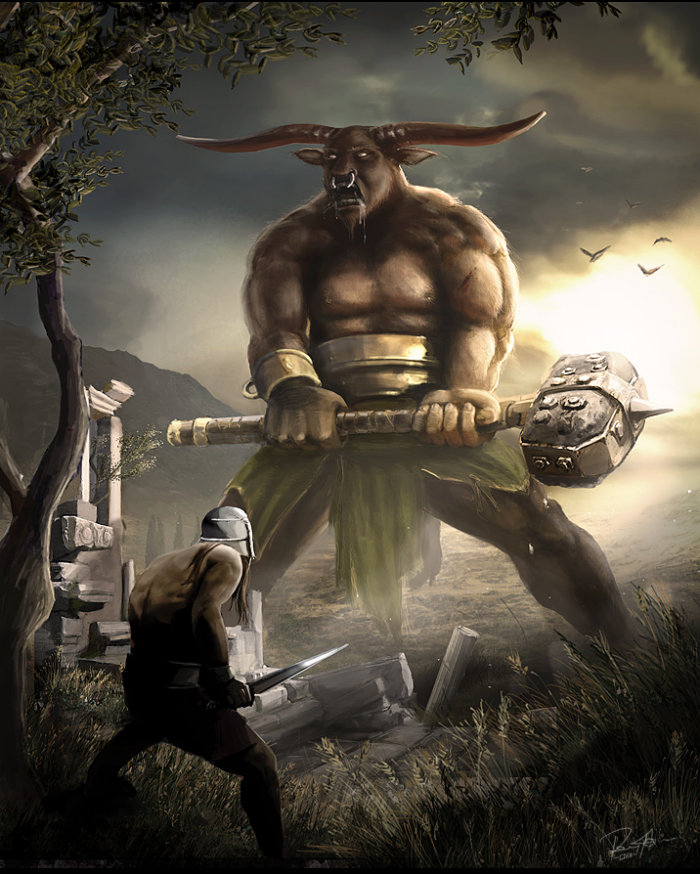
5. There should always be more minotaurs. Preferable riding on cherry-red mopeds.
And if Brandon Sanderson wants to start an internet feud, he can GET IN LINE.
Thanks for reading my ramblings. This is what happens when I’m not editing.
I don’t know who this guy is, but he is most displeased at my lackadaisical posting schedule of late.
But I was editing, black and white photo soldier guy, who I hope is not some sort of war criminal! I can see that ceremonial dagger on your belt, and I’m sure you’d like to dispense some pre-Internet justice, but hear me out.
In between normal life errata and work neccesity, my creative-time has been in short supply. Lodestar has taken a turn for the awesome as we rocket towards the conclusion – and I’m determined to deliver on the storytelling and gameplay promise of the campaign and not leave my players disappointed when it wraps up in September. On top of that I’m running a short side-game for some neophyte nerds in the neighborhood, plus planning for my Top Secret Next Campaign. Compounded with time rolling in the floor with the new puppy, and other general puttering about – I’ve been swamped.
I finished the rough draft of Spell/Sword back in April, then put it away for as long as possible before diving into editing. I made it a full four weeks, which was torturous indeed.
True editing began in May, here was my process:
1. Print out the draft, and read through it. Making only absolutely necessary notes in the margins.
2. Cry.
3. Read through it again, making nit-picky grammar notes.
4. Take all of the comments/edits from the paper version and add them to my Google Doc. “No argument” edits were implemented immediately. [Grammar fixes, word choice, spelling mistakes, erotic centaurs scene] More complicated edits requiring more thought or massive chapter-spanning revision entered as Comments onto the G-Doc.
5. Man, there’s a lot of these Comments. [63 total, only 17 of which were related to petticoat description. ALWAYS NEED MORE DESCRIPTION OF THE COURTLY LADY DRESSES]
6. Worked in fits and starts on the larger edits. The easy ones first, picking at the edges — then finally dived into the more serious ones in June.
7. Anxiety Quicksand. Edits seem to be making book worse. Every thing I read seems to be terrible, even if not explicitly marked for revision. I hate the book, and spend a lot of time polishing a terrible, shiny thought. Writing this draft was one of the hardest things I’ve ever done — a goal in my life that I never imagined I would accomplish. To have made it this far is nothing short of miraculous — but the book still might not be any good. Effort does not equal excellence in writing, or any art. I might have a completely unusable draft, rotten to the core. I might have written a book and still not have a book.
8. Kept editing.
9. Started to lose the feeling of forward momentum, so I engaged the Saving Grace of Art. A deadline. Contacted my Alpha Readers, and let them know that I would be printing the draft the first of July to send them copies for review. I embrace that deadline, and editing redoubles in ferocity.
10. I like the book a little better. Well, let’s be serious — I love the book, but understand that I have lost any objectivity. I’ve read it too many times, I’m way too close. I finish up major edits, with the salve that I’m going to go through this whole process again once my Alphas have a crack at it. Only they can tell me whether or not my child is a Goofus or a Gallant.
Highlights reference! These always bothered me. Maybe Goofus’ friends needed a little “tough love”, and who’s to say Gallant even liked oranges? Look at that smug S.O.B. — he probably poisoned that fruit. Yes, I was a child concerned with logical fallacies, move along.
11. I have one last brainstorm for my editing before releasing it to the Alphas. I read the entire draft out loud in one sitting. I catch innumerable grammar, tense, spelling, and logic errors in the process. Best thing I’ve done, next time around I’m planning on doing this much, much earlier. I also record me reading it [TECHNOLOGY!] for further review.
12. I like the book.
13. I send the draft to be printed for Alpha Readers. I feel a sense of pride that my closest friends and advisors will soon know how fucking clever I am.
14. I listen to the recording, and immediately catch a dozen glaring syntax and logic problems.
This sand is filled with irony!
15. Cry a little bit. But you know, in a badass way, like Chow Yun Fat in The Killer.
I know I’m not unique in my process, or in my reactions — I know my colleagues and associates are sick of my talking about these things like I invented Author Malaise. But, you’re my blog and this is my first time up this thorny path — so get prepared for some serious whining and navel-gazing.
Also, some ruminations on various literary and genre concepts. I’ve been struggling to put my novel in context with others in the genre, and I’ve had some thoughts. SOME THOUGHTS, I SAY.
I’m also thinking about pulling my old weekend STORY ON DEMAND out of mothballs, now that I have a little more brainspace to spare.
What do you think, Corporal Steely Breadcrumbs?
I’m just here for the ladies. And the oppression of the Proletariat.
The latches of his guitar case were brass, but they hadn’t closed properly in years. The case was cracked red leather – an elaborate network of twine kept it shut for travel, and generally he had plenty of time before a show to tease loose the knots.
Running through the midnight streets, breathing hard, with seven ghost-faced dogs on his heels, Max wished he had scraped up the coin to get the latches fixed.
He tumbled over a cart full of purple pears, and watched as the guitar case went skidding across the cobblestone street. He ignored the cries of the cart’s owner, and the blood coming from his scratched hands, and crawled after the case desperately. He laid one hand on it, as the first dog skidded to a stop.
Someone had spent a pretty purse on their construction, brass tubes vented steam, and through its transparent skin Max could see the fierce engine cackling and turning. The dog’s hide was mostly turtle-glass, with strips of steel binding the seams and joints. It opened its crystal jaws, and growled – the sound of breaking crockery.
Max’s face stretched into a smile, and he ran a hand through his hair. It was silver-gold this month, and looked absolutely absurd and didn’t go with the electric blue of his long leather coat. Max had a deep, abiding belief in absurdity. I’ve got to get this damn case open, which means I have to…oh, Sid and Nancy.
He pulled his case close, and barreled his way towards the burning-glass dog, trying to angle his shoulder protectively.
Glass dogs are hard.
Max managed to carom off the construct’s left flank and spin into the street. Just in time to see the other six tear around the corner, and point their glass-snouts at him.
“Aaaaaaaah.” he said, quieter than he would have preferred. He was still sucking in air after hitting the first dog.
Max stumbled forward, and climbed up on the first high point he could find. A jewelry stand, made from a couple of boards stretched across two empty metal drums. The shopkeeper screamed at him, but fled upon seeing the glass dogs. Max quickly dug into the front of his black slacks, and fished out the small knife he kept for emergencies. He sighed as he laid the knife to the first knot. These are going to be a devil to re-tie.
The old guitar case popped open, dirty twine falling on top of his blazing green boots. It had cost a month’s wages to have them actually light up, but Max had never regretted the purchase. Great art, requires great sacrifice.
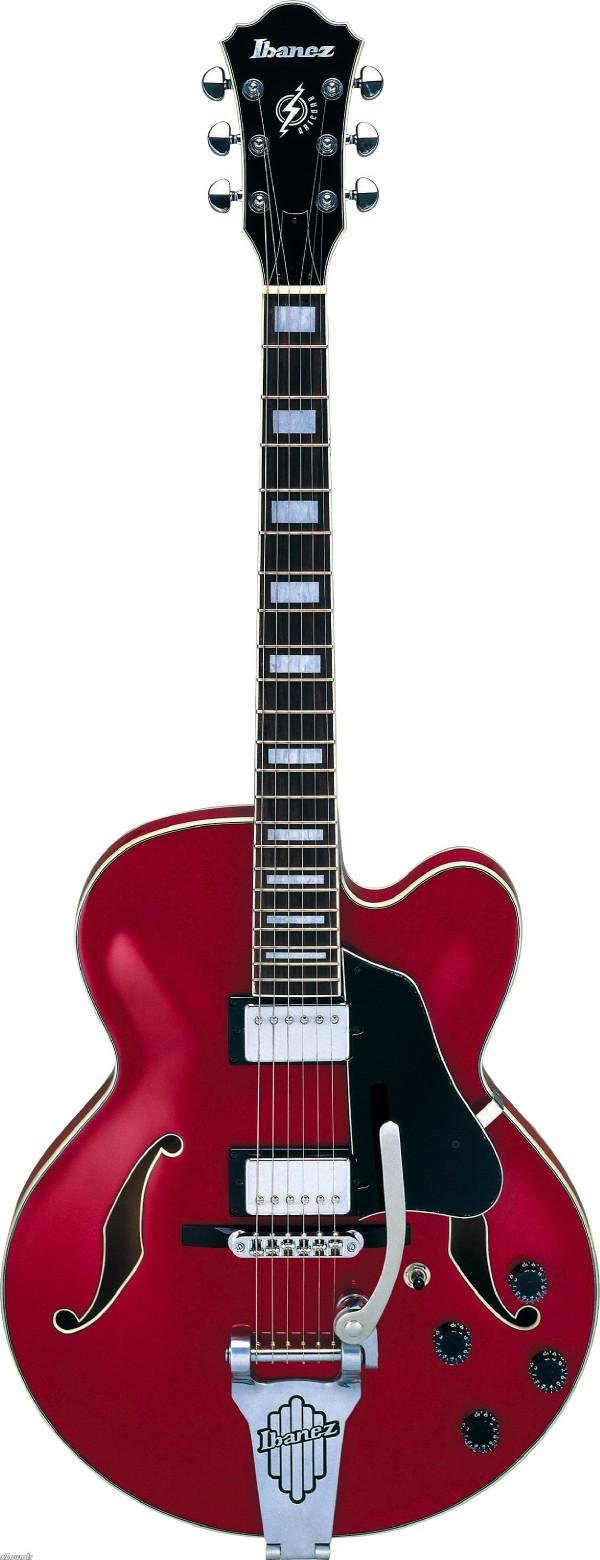
It was red. Strings and steel, and love and pain. His guitar.
Max pulled the strap over his head, and turned to face the seven glass dogs. He nodded to them, as courtly as a queen — and hung the travel amplifier from his belt. Thumb on the power switch, all the lights turned green.
The bard pulled the pick from behind his ear, and tightened his Gamma string. The lighting on this street was less than optimal, but for an impromptu performance it would have to do.
He could still put on a show.
Max raised his hand to the heavens, then brought the pick down across the strings.
A roar of sound – a beginning. Cracks appeared in the faces of the first two dogs.
A quick arpeggio to loosen up his fingers. One of the dog’s steam engines began to suck in exhaust — condensation and fire forming inside the transparent creature.
A moment of silence, to gather his audience in — the glass dogs howled and leaped forward.
Max momentarily considered his song choice. These were lifeless machines sent to tear out his throat, they didn’t really have a say in the matter. Maybe he should go easy on them.
Then he remembered the cut knots. And he smiled.
Max played ‘Eruption’ and the dogs exploded. A thousand shimmering shards of glass and steel flew backwards from his music. Max played his guitar in the midnight streets, and the glass dogs were no more.
“That’ll teach you to tangle with a rock and roll god.” he said to the rubble, and did his best to correct the tangle of his hair.
“Yeah. A god.” he added, and stepped down off the stage.
The dying villain drifted back to awareness a few hours after dawn.
A little girl with purple hair and empty eyes stood over him, holding a wooden mallet and a metal spike, cannibalized from a nearby conduit.
Philipp Dornbierer
A slow stream of green ichor dribbled from his eye sockets, but Izus managed to cock an eyebrow skeptically.
“You’re holding it all wrong.” he said, corruption burbling in his chest. “Don’t choke up so much on the handle, you won’t get a clean swing.”
Sinoe corrected her handhold on the hammer, and placed the tip of the spike surgically on his throat.
“I’m glad there’s someone with half a brain on this ship.” Izus said calmly. “Even though yours is just gears and wire.”
The construct carefully lined up the hammer with the top of the spike, and made a few practice swings -perfecting the arc. The mallet hit the spike with the lightest of chink sounds.
Sinoe raised the hammer to strike, then stopped.
“Problem?” Izus asked.
“Your death is the most logical conclusion to several sets of problems. It would benefit the overall well-being of the ship immediately, as well as prevent any possibility, however remote, of future danger from your actions or influence.” Sinoe replied.
“Absolutely.” the villain said. “Very sound reasoning.”
“But – I can’t.” the barest edge of confusion entered her mechanical tones. “I can’t. Something..old…won’t let me.”
Izus looked up towards the cargo bay ceiling for a moment, then angled his eyes towards Sinoe. The construct stood as still as a statue, still holding the hammer high.
“It was…necessary.” he replied. “Many strange paths, many dark days — all for necessity.”
The Browncloak coughed fiercely, sending more purple phlegm across his chest. At the end it turned into weak laughter.
“Listen to me, getting a little maudlin and drippy. I always get a little choked up when I talk about child-murder. Ah, so many happy memories….” the villain leered at the paladin.
“Ah, Gentle Sir Knight, with your wide cow-eyes. I think you will soon understand a tiny part of what I mean — about necessity. Because now the great game truly begins.” Izus flopped a wounded hand off his chest onto the floor between he and the others. With battered fingers, he slowly began to draw crude figures in the strange ichor that was his blood.
“The board, Kythera.” he drew a wide oval. “The pieces – a key, a shield, and a girl.”
Three crude drawings slowly appeared inside the oval.
“Now the key has been removed, but the game still moves on.” Izus wiped away the crude picture of the Crimson Key. “And the girl is also out of your hands.”
He smudged out the picture of Talitha. The Browncloak was beginning to pant with exertion.
“The only piece that remains is the Shield — and whatever knowledge you’ve brought with you, or can discover in the Unbroken City.” he concluded.
The villain laid his palm flat on the floor, covering the picture of the shield.
“Ah….but you don’t control the Shield. I do. ” his voice became thin with exertion. ” And if I die, you’ll never find it. ”
Izus coughed again, regaining some strength to his voice.
“That’s what I mean about necessity, Sir. If I die, you’ll never save her — you have to keep me alive to give yourself any chance at all. Keep me alive, knowing what I am.” Izus leered again, the flesh of his face cracking horribly. ” Keep me alive, knowing that I’ll kill the girl as soon as I have her in arm’s reach.”




 spell-sword.com