First, before all else, before another word — thank you. You are doing me a giant favor, dedicating your time, knowledge and taste to helping me achieve a goal that I’ve had my entire life. Thank you, thank you – thank you a thousand times.
“Wait, I don’t remember telling Derek I’d do this for him.” You probably forgot, that’s okay — don’t worry, I’m not offended. You’re a busy person.
Can I admit that I’m afraid of you?
I’m not one that enjoys making art of any permanence, my insecurity and ego will not allow it. Temporary, ephemeral bursts of creativity – that’s my racket. But now I’ve written an entire book — with a beginning, middle and end, and now I’m going to let you inside my head to read it. You might all hate it. Hate it viciously. Or even worse, find it mild and forgettable. You are going to tell me things I don’t want to hear, you are going to break my heart. And more often than not, you’ll probably be right. And you must do these things, I implore you.
Which doesn’t mean I’m not going to be a giant baby about it.
I’ve never done this before! You can’t expect maturity.
I’m completing my latest pass of editing this week, then sending the draft to be printed so I can hand deliver them to you. If you would prefer a nice, shiny PDF of the draft instead I can happily provide it [what’s more you’ll get your copy earlier than the other people.] If you don’t live in Athens, please send me the address you want your copy mailed to.
Title: Spell/Sword
Draft Length: 144 pages / approx. 50,000 words
Instructions
1. Read the book.
2. Tell me what you think.
I have no idea how each of you wants to give me your feedback. We could sit down and talk about it, or you could send me an email, or attach your reply to the wing of a raven and hope for the best. Whatever is most comfortable for you, especially when you have to give me the “bad news”. I vow to be as professional and non-tear stained as I can be when you give me constructive criticism. What works best for you? Respond to me directly with your thoughts.
I’m trying to be scientific about this process, it alleviates my anxiety. In this first Alpha Reader group there are an even mix of genders, and a fair spread of age ranges. All of you are fans of genre fiction in some way or other, and I respect your opinion as an educated audience member, but also as artists and creators in your own stead.
After you’ve all given me your feedback, I will internalize your responses and then do a fresh edit of the book – probably several, before it goes on to be read by 5 brand new readers for the Beta Draft.
Suggestions
1. Please don’t discuss the book with each other, until after you’ve given me your feedback. Don’t be messin’ with my scientific method.
2. Don’t copy edit. If you can’t stand a grammar issue [and there will surely be some] please feel free to mark it, but don’t feel like I’m trying to con you into hours and hours of work.
3. Write all the notes you want on the draft! I want to know when you had questions, when you were confused, and most importantly, when you got bored.
4. Help me make my book better. Whatever that means, however you think best to do it.
And his hand slid through the hilt as if it were made of dream.
The barbarian stumbled forward, thrown off balance. He turned around, and the sword was gone.
In its place stood a hooded figure, old gray travelers cloak worn thin from endless miles on the road. Agnar glanced around and saw the temple seemed to be caught in gray amber, the clerics at the doors were nearly statues they moved so slow, the demons outside were a painting in stillness. A moment out of time.
The figure squared his shoulders, and fell into a natural fighting stance. Strapped across his back was a massive greatsword, the length of it tightly wound in dark cloth. The cowl slipped back, and Agnar stared into a stranger’s face. His face was clean-shaven, flat as slate — his hair was nearly gone, just gray fuzz on the sides of his head.
“Need is not enough.” the traveler said.
Agnar tried to respond, but found himself mute.
“Fate is not enough.” the traveler said, and Agnar felt the winged mark on his palm burn and itch.
“Rage is not enough. Skill is not enough. Might is not enough. All of these are dust.”
Sand began to pour from the sleeves of the traveler’s cloak, Agnar tasted the desert on his tongue.
“Only love is enough. Only truth is enough. Only sacrifice is enough.”
The traveler turned, and looked out towards the doors of the temple.
“You can bring death, but can you bring life? You have walked in the Light, can you bear its lack? Go out into the world, go without the Bright Lady’s balm, survive, and redeem one of the wicked. One evil soul brought back to the light, and I will be yours to wield — from now unto the Cracking of the World.”
The traveler walked away, and faded even as time slowly wound back to its proper pace. Agnar stared ahead at the demons pounding on the doors of the temple, and felt a dry, empty feeling steal through his limbs. A man who has lived his life ever by the sea, withers and dies when he can not hear the waves crash.
Marlowe looked up with great pain, and smiled with the sadness of knowledge. “Your trial begins, brother. You have stepped out of the Light.”
“Reports are hazy, but the main assault seems to have begun in the Southern District — from the Thieves Alley. Spice is much deeper down then those tunnels, so they’re probably no worse off then we are right now.” Ganalie interjected. “The members of the Lyceum were all scattered across town, and many of the Houses have fallen to fire and death —there’s no real leadership to the town left, except for Tom of House Brighella and the Grahd boy. I can hold things here for now, but we need someone to gather our forces and make a plan for a counter attack. As things stand now, our best option is to let the South Quarter burn, and do our best to preserve the other three districts, and the Loghain Primex at all costs. You and your friends are a mighty force, but even you can not stand alone against the evil that burns and capers in the streets of my city.”
Tears streaked down her dark face, trails through the ash.
Ganalie leaned in close to Haskeer. “My city needs a leader, Knight of the Rose. Not another soldier.”
Fireside
Agnar scanned the charred spires of burning towers, yellow flame and black smoke with frustration. Then, as if in a dream, the smoke parted. His vision moved across the city, howling like a gust of wind and he saw it. A burning blade, in a house of stone. The last defenders of the Bright Lady’s temple, Arcleric Tome’s face tight with pain, ignoring the bloody stump where his arm once was. Laying about left and right with a mace, spreading the healing power of Sarenrae to the tight knot of the faithful that held the doors against the demonic assault.
Come, my chosen. A voice whispered, remote and sad. It is time. Time for you to be tested. Take up my sword, and turn back this tide of darkness.
I’m on schedule for finishing my Alpha Edit of Spell/Sword before July 1st — my personal printer [aka my mom] is waiting to print copies for my crack team of Alpha Readers.
Editing is like painting with sand — everything you do changes the landscape, and draws into question things that you once considered granite-bedrock of your fiction.
I’ve spent a lot of time just sparring with anxiety. Am I editing too fast, too slow? Are the changes I’m making good — are they bad? Why aren’t there more minotaurs?
I’m terrified of getting overzealous and damaging the heart of the work — I’m terrified of not doing enough and leaving cancers to grow and fester in the lines and pages of the book.
I do think it’s time to crack the door open and let some other eyes prowl over the pages. I’m restricting my Alpha Readers to 10, half male, half female — and a pretty even spread of reader-types, and writers that I respect. After they get done, and give me some feedback, and I can stop crying — I’ll get back to work on a Beta Draft for the final round of 5 readers — my toughest critics: my girlfriend, a world-renowned Shakespearean scholar, a playwright, and the cruelest douchebag I can find.
There’s been a long running debate at our theatre, a quiet dissatisfaction with one of our noble facets — not so much with the venue itself, but with its nomenclature. I refer to Second Stage.
The name is innately confusing. There is only one stage in our humble Gray Block, and many a patron has squinted carefully at every square centimeter while the Main Stage director drones on about the next production. Could there be another stage squirreled away somewhere in here?, they ask. Is it under the normal stage, is it on the roof, is it through the secret passage in the Men’s Bathroom?
[NOTE: The Secret Passageway in the Men’s Bathroom is not a real thing. And if it was, it certainly wouldn’t lead to a lavender-scented boudoir filled with faded leather armchairs and shelves of aged mahogany. Also, there isn’t a harpsichord player on staff. Don’t…
“The Long Night still comes, pup. But for now we are alive, and there is mead to be drunk.” Grell the Death crooked an arm around Agnar’s neck and dragged him away from the others.
The barbarian found hard hands on his shoulders, warm kisses from matron and maiden, the devil blood still spattered on his arms and face was smeared with bold cries by each warrior singing to the sun. The meadskin swung up and down, up and down and the honey-gold spilled down Agnar’s chin.
Then at once, there was space and silence. A tall warrior stood alone in front of a wide hall. Thunor Sky-
“Hish, Lord of Silence” Illustration from The Gods of Pegāna by Lord Dunsany, 1905
Breaker stood alone and faced his son. The dancing crowd fell quiet and hushed.
“Who is this warrior?” Thunor asked.
“This warrior is called Agnar.” Grell responded, a ritual.
“And what blood has he spilled?”
“The blood of our enemies. The black blood of Hell, the white blood of the Wolf and the red blood of the North. His own blood.”
“Is the blood good?”
“The blood is good.” Grell said.
“THE BLOOD IS GOOD.” Roared the gathered people of Marankur.
“Has he stood in the snow, has he broken bone, has he danced, has he sung in the flames?”
“All this and more.” Grell said.
“Who is his father?” Thunor said, dark eyes locked with Agnar.
“His…his…”Grell stopped, and looked to his chief for aid. Thunor said nothing, his face cold and hard with a lifetime of pride. A murmur of discomfort rippled through the crowd of gathered barbarians.
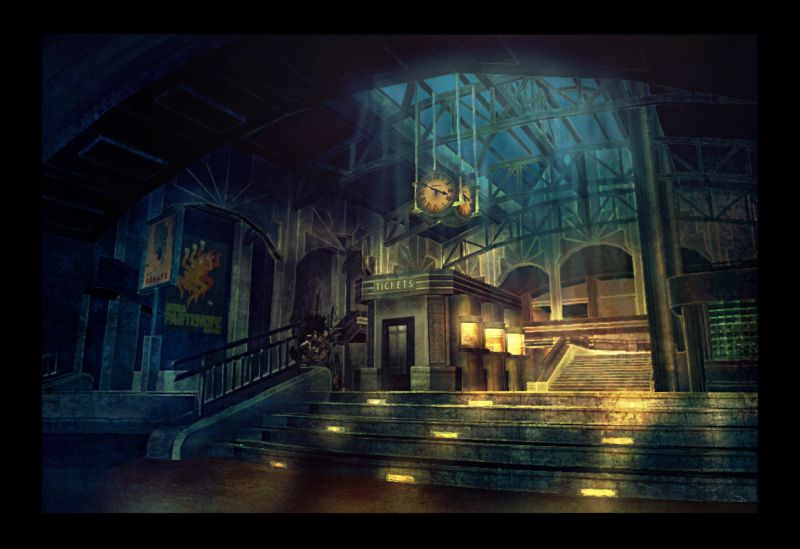
I’m in a production of Shakespeare’s Comedy of Errors, and a friend came to see the show last night. Here is the wonderfully arcane series of texts we traded. Warning: These jokes require a clear memory of the game Bioshock, as well as serious familiarity with the Bard’s text. In other words, this will be funny to no one.
Josh: I’m seeing a definite Bioshock influence in the Comedy of Errors set .Deliberate or unintentional.
Me: Sadly unintended.
Me: No gods or kings!
Josh: Is Antipholus not entitled to the sweat of his own brow?
Me: Antipholus chooses, but Dromio obeys.
Josh: Haha. Well played, sir.
Yes, we are freakish nerds. We also made jokes about sandwiches made by Determinism. Envy us.
The final night of auditions for Lysistrata, our next Main Stage show are tonight. I know you’re sitting there, obsessively reading the description on Facebook –but you just can’t bring yourself to take the plunge. You’re too scared, too inexperienced, too frail!
Town & Gown is a unique organization, and you are right to be a little apprehensive. Don’t worry! Here are some simple tips to help you audition with style, aplomb, panache, and an 82% chance of being cast!
1. Review the script, or at least a synopsis before coming to auditions. Directors appreciate an informed actor!
2. Wear something loose, and easy to move in.
3. Bring your calendar. The more information you can give about your schedule and potential conflicts makes the production staff’s job a lot easier when planning rehearsal.
4. Right before arriving at auditions, it’s best if you punch a hobo. Normal vagrants, and…
1. I’ve been working on my very first novel. [QUIVER. CLENCH. ANXIETY-NINJAS IN MY STOMACH.] I started working in September, and completed the very, very rough draft in April.
2. I’m coming around the bend on my first round of editing. Soon I will let a few Alpha Readers take a long look, before they solemnly set fire to my manuscript and without breaking eye contact — dial the authorities.
3. While I try to stay focused on the craft itself of working on the book, I have noodled around a bit on The Next Step. The world of traditional publishing is contracting, and it’s never been known for being an easy assault for new talent — so, most of my thoughts have been centered around Self-Publishing. With resources like CreateSpace via Amazon it’s childishly simple to do, and I could have the most basic unit of my goals with a modicum of time and effort — i.e. a paper book that I slap in my mom’s hands.
4. I heart Pat Rothfuss. Name of the Wind and Wise Man’s Fear are excellent books. Wise Man’s Fear is one of the only books I can ever recall finishing …then immediately starting to read again. Slowly, languorously. I went on to read other things, but I would circle back like a honey-drunk bee to take another sip. I read that cat’s blog religious — and all of this novel nonsense is so I can send him a copy [right after my mom] and then he’ll read it and think I”m awesome and that we should be best friends and then he’ll come to my birthday party. THIS WOULD CLEARLY BE HIS REACTION TO MY WORK.
So, contextualized?
Today I read an interview he gave, linked into his own blog.
I was chuckling at his wry humor, and stroking my chin at the interesting bits — when I came to this section:
PR: Not really. Because, as I mentioned, I wanted people to read my books.
I know there’s a lot of talk about self-publishing right now. Everyone’s giddy with the possibilities. And I’ll admit that it looks good on paper: sell your books directly and keep a bigger chunk of the profit for yourself. No rejection letters. No hassle with agents. Sounds good, right?
Except nobody knows who you are. And nobody really cares. And your book is mostly crap because you haven’t had a substance-level editor give you feedback and make you revise it a couple of times. And your book is full of typos because you didn’t have a copy-editor read it. And the layout is ugly because you don’t know anything about layout…I’m sure you get the picture.
It’s like the query letter problem that I just mentioned, magnified a hundredfold. You might be good at telling a story, but that doesn’t mean you know anything about marketing. Or layout. Or editing. Or publicity. Or selling your books for foreign markets.
Even if you’re surprisingly good at one of those things, you’re still not going to be as good as a professional. You don’t know the tricks of the trade. You don’t know the right people to call. You don’t know what mistakes to avoid….
Everyone can point to a few examples of people that have done very well for themselves self-publishing. But honestly, those folks are lucky as lottery winners. They’re statistical anomalies. You want to publish with a publisher because a publisher knows how to publish a book. And you don’t. You really don’t.
Woof.
Dang.
Now, first and foremost, this isn’t about how Pat Rothfuss broke my heart, or what a big meanie-face he is, etc. etc. His beard is made of laughter and moonbeams, people. From my EXTENSIVE PERSONAL KNOWLEDGE [aka reading his blog.] he is clearly not a malicious person in any way. He was speaking from his own experience, trying to give helpful and clear advice.
It was a bit stern, and absolutist — but then, I remembered — Nerd/DM High Speech. Nerds speak in absolutes, with unwavering knowledge about whatever topic is in our demesne. It probably comes from being the smartest kid in the class, or years with our finger pointing at the small print in the Player’s Handbook. We all delight in pronouncing This is how it is. This is how it works. No, you cannot gain access to 6th level spells, just because you have a magical ability that increases your effective caster level, Carbunkle.
No, this post is about my reaction. I felt foolish.
Here is a writer and person that I respect telling me that I’m functionally wasting my time. I will self-publish my novel and it will be garbage. It will not be discovered, it will not be read. I am doing a disservice to myself and to the work itself by going this route. Pat Rothfuss told me I was an idiot.
This is not how my fanfiction plays out AT ALL.
I don’t think he’s wrong. I don’t think he’s right either.
For the vast majority of people self-publishing, he’s absolutely right. We all need to hear the stark truth like that. A wake-up call that if your goal is financial success then you are setting yourself up for failure. You are not some maverick Hemingway blazing across the firmament while thumbing your nose at traditional publishing. If you got into this gig to be the next 50 Shades of BLAHBLAHBLAH, then you are in it for the wrong reasons. Take a glance at the amount of self-published drivel on the Amazon Kindle alone. His metaphor of winning the lottery is apt. Every writer can benefit tangibly from a trained editor, copy-editor — and the inarguable expertise in marketing and layout that a publishing house can bring to bear.
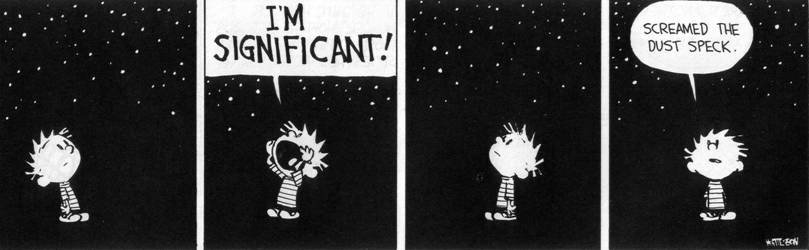
But, I’m special. SCREAMED THE SPECK OF DUST IN A TRANSPARENT ALLUSION TO THAT CALVIN AND HOBBES STRIP.
YOU KNOW, THIS ONE. [I miss Bill Watterson.]And beyond that, I do believe that traditional paper publishing is in its dotage. We’re caught in the weird wilderness between traditional and digital publishing, and all the old dinosaurs are late to the game. The tools are all laying around [editing, design, computers with blinky buttons] — what’s to stop us from selling and promoting our own work digitally direct to our audience? John Scalzi almost pioneered this concept, releasing his work chapter by chapter on the web, then backed into traditional publishing after he had already built a readership. And he’s the president of the freaking Science Fiction and Fantasy Writers of America, now!
There are more options now then ever, so more people than ever are going to chase the dream their own way. So, yeah, me too basically.
I have taken his thoughts to heart. I’ve always considered self-publishing the book as a first step, a tool to one day get picked up by a publishing house. The first book is a resume for the new job I want to have.
I hear you, Pat. I really do. But I am mercurial at best — I just can’t stay motivated with the idea of finishing the book THEN enduring two years or more of frustrating query letters, and standing like a beggar outside the big publishing houses wearing an adorable Dickensian top hat.
Well, maybe the top hat.
So, I’m sticking to my guns. Alpha Readers in July. More and more editing after that, and then when I say done I will use this fancy InterWebamaphone to put my book into people’s hands and on their fancy e-readers.
And I’m still sending you a copy, Pat. I’ll save you some cake, and a brightly colored hat.