Several people have sent me the excellent NYT article about all the current ANTIGONE productions happening in the city. It’s well worth reading, exploring the various versions/adaptations – with a passing nod to our own Anouilh’s script.
Let’s all pause to have me admit that I never EVER spell his name correctly on the first try. He’s the sitiuation of French playwrights.
The article has two perhaps unforeseen effects.
- Making me feel very hip and savvy to have tapped into the cultural winds that have brought so many adaptations of ANTIGONE to the Big Apple, all the way from my chair in Athens, GA on the absolute bottom rung of THEATRICAL ART.
- Drawing my attention to the Greek word ‘deinos’. *ominous rumble of thunder sound clip / specifically the Sesame Street – Count von Count one*
Antigone can be an extreme character. The word used to describe her, and many Sophoclean protagonists, is deinos. It means “strange” or “uncanny,” describing a world-breaking stubbornness that is simultaneously unyielding, magnificent and frightening. Even when her sister, Ismene, is trying to comfort her, Antigone throws herself in harm’s way. Her unreasonable righteousness is indistinguishable from self-destruction. Antigone never tries to save herself, or operate in secret. Instead, she speaks out, placing her beyond Creon’s ability to forgive — and also giving her qualities beyond the human. “I follow death, alive,” she says.
Antigone, deinos to the max, created the model for a particular kind of (anti)heroine: the “bad girl.” She is disruptive, a total pain, unpliable and correct. Sometimes this figure is interpreted as a kind of punky riot grrl, or a protofeminist, or a mentally troubled woman. Thanks to Sophocles, who was writing in a time when women didn’t rate as citizens, “girl” is now another word for “courage.” Imagine one, arms akimbo, ponytail flying, and you automatically picture her facing down the world. – Helen Shaw / NYT / Who is Antigone? The 2500- Year Old Greek Heroine Who’s Story Never Gets Old
Reading this passage – I felt a nice little LEGO block snapping together type feeling. Finally, a perfect Greek word for this woman coursing with electricity, something for my brain to hang all sorts of thoughts on. I’ve been trying to describe her to friends and actors interested in our production and the best I’d managed so far was “Antigone has a knife. She always has a knife. Everyone in the scene knows she has a knife but no-one knows if she’s going to stab them, herself, or nobody at all. She will never put down the knife. Sometimes, she hides the knife…poorly.”
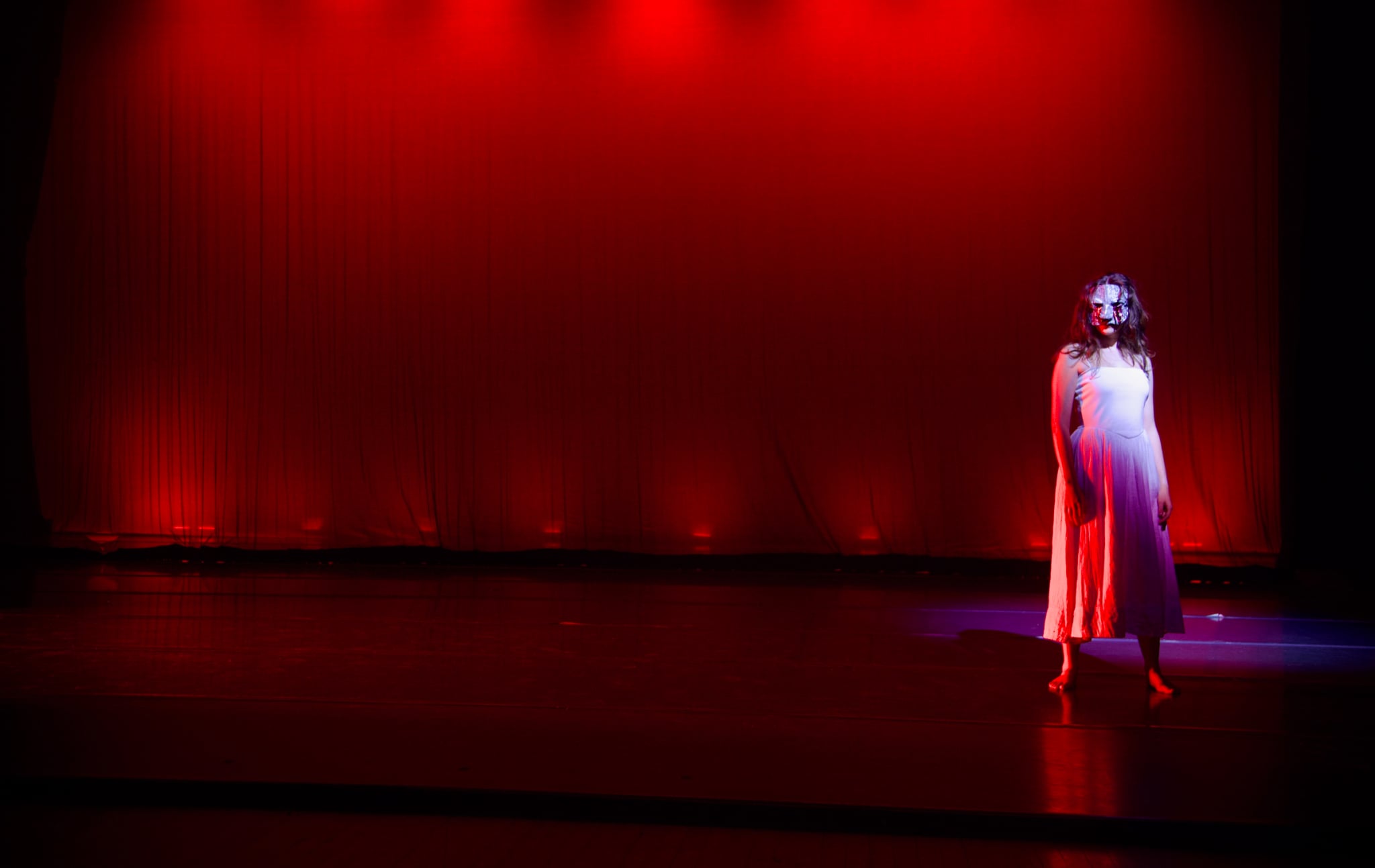
It also doesn’t hurt that ‘deinos’ is the root from which DINOSAUR was created.
I find it deeply interesting how much Anouilh’s script focuses on this strange otherness in her — and how much the character grapples with it herself. She seems desperately to want to be any other person, to have any other destiny. The lines about how she dressed herself in Ismene’s style in an attempt to please Haemon, or perhaps to just squeeze out from under her appointed role for a few hours are pathetic. But unfortunately she is ‘fucked by fate’ as that modernized version of Beowulf said of Grendel. The few breaths of relief when she almost leaves the stage under Creon’s advice, almost to be merely human. But, as the Chorus reminds us, there is no escape in tragedy – that is the majesty of it.
 spell-sword.com