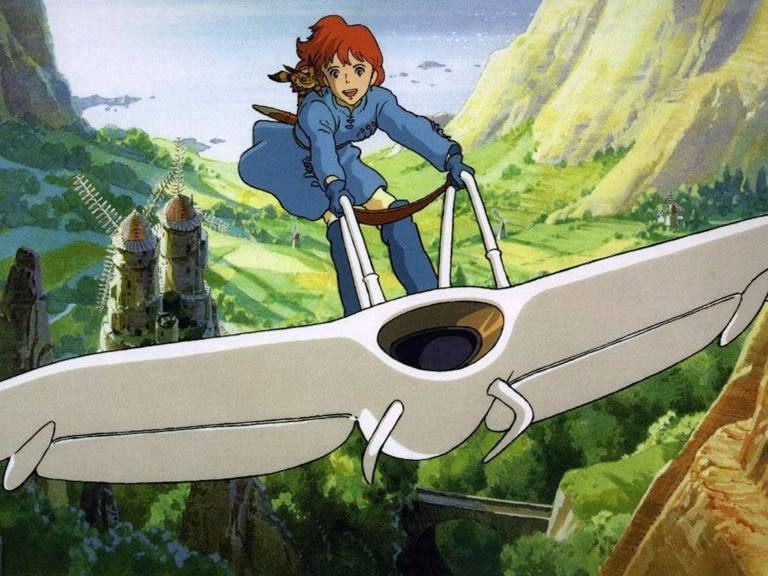
Echodactyl swoops low over the frenzied demons, keeping close to the tops of the buildings to conceal her outline from any of the enemy.
The organized group moves through the chaotic demons. A dozen armored forms form a perimeter, holding large standards, gleaming white even in the rain with three blue swords crossed — the ancient sigil for the country of Gilead. The four-limbed vaguely female demons writhe and caper, attempting to run their bloody claws against the white banners, but they are ruthlessly crushed and pushed out of the way by the Hell Knights, their gleaming silver armor a cruel mockery of the noble Gilean paladins of old. Orange light pours from their helms, pulsing from fiendish orbs.
In the center of their column walks a grander horror. A white spider, massive and elegant – it’s legs arced and slender — longer in proportion than any mortal arachnid, click and clack down the city street, as careful and dainty as a maid with her master’s porcelain tea set. Every few hundred paces, the spider stops and two knights rush into the throng of demons , pulling gibbets of human flesh from their jaws — half butchered corpses, and to Echodactyl’s revulsion, still living citizens of Pice. All screaming and wriggling, stuffed into the massive creature’s gut.
Her flying arc takes Echo around the back of the devil column, and the backside of the vast arachnid. Her double-lidded eyes blink, and she stares at the bulbous sac rippling underneath the creature’s abdomen. Her lack of familiarity with land creatures gave her a moment’s hope, but with a sinking sensation she realized she knows exactly what she was looking at.
An egg sac. Full to bursting with the white spider’s young.
First, before all else, before another word — thank you. You are doing me a giant favor, dedicating your time, knowledge and taste to helping me achieve a goal that I’ve had my entire life. Thank you, thank you – thank you a thousand times.
“Wait, I don’t remember telling Derek I’d do this for him.” You probably forgot, that’s okay — don’t worry, I’m not offended. You’re a busy person.
Can I admit that I’m afraid of you?
I’m not one that enjoys making art of any permanence, my insecurity and ego will not allow it. Temporary, ephemeral bursts of creativity – that’s my racket. But now I’ve written an entire book — with a beginning, middle and end, and now I’m going to let you inside my head to read it. You might all hate it. Hate it viciously. Or even worse, find it mild and forgettable. You are going to tell me things I don’t want to hear, you are going to break my heart. And more often than not, you’ll probably be right. And you must do these things, I implore you.
Which doesn’t mean I’m not going to be a giant baby about it.
I’ve never done this before! You can’t expect maturity.
I’m completing my latest pass of editing this week, then sending the draft to be printed so I can hand deliver them to you. If you would prefer a nice, shiny PDF of the draft instead I can happily provide it [what’s more you’ll get your copy earlier than the other people.] If you don’t live in Athens, please send me the address you want your copy mailed to.
Title: Spell/Sword
Draft Length: 144 pages / approx. 50,000 words
Instructions
1. Read the book.
2. Tell me what you think.
I have no idea how each of you wants to give me your feedback. We could sit down and talk about it, or you could send me an email, or attach your reply to the wing of a raven and hope for the best. Whatever is most comfortable for you, especially when you have to give me the “bad news”. I vow to be as professional and non-tear stained as I can be when you give me constructive criticism. What works best for you? Respond to me directly with your thoughts.
I’m trying to be scientific about this process, it alleviates my anxiety. In this first Alpha Reader group there are an even mix of genders, and a fair spread of age ranges. All of you are fans of genre fiction in some way or other, and I respect your opinion as an educated audience member, but also as artists and creators in your own stead.
After you’ve all given me your feedback, I will internalize your responses and then do a fresh edit of the book – probably several, before it goes on to be read by 5 brand new readers for the Beta Draft.
Suggestions
1. Please don’t discuss the book with each other, until after you’ve given me your feedback. Don’t be messin’ with my scientific method.
2. Don’t copy edit. If you can’t stand a grammar issue [and there will surely be some] please feel free to mark it, but don’t feel like I’m trying to con you into hours and hours of work.
3. Write all the notes you want on the draft! I want to know when you had questions, when you were confused, and most importantly, when you got bored.
4. Help me make my book better. Whatever that means, however you think best to do it.
And his hand slid through the hilt as if it were made of dream.
The barbarian stumbled forward, thrown off balance. He turned around, and the sword was gone.
In its place stood a hooded figure, old gray travelers cloak worn thin from endless miles on the road. Agnar glanced around and saw the temple seemed to be caught in gray amber, the clerics at the doors were nearly statues they moved so slow, the demons outside were a painting in stillness. A moment out of time.
The figure squared his shoulders, and fell into a natural fighting stance. Strapped across his back was a massive greatsword, the length of it tightly wound in dark cloth. The cowl slipped back, and Agnar stared into a stranger’s face. His face was clean-shaven, flat as slate — his hair was nearly gone, just gray fuzz on the sides of his head.
“Need is not enough.” the traveler said.
Agnar tried to respond, but found himself mute.
“Fate is not enough.” the traveler said, and Agnar felt the winged mark on his palm burn and itch.
“Rage is not enough. Skill is not enough. Might is not enough. All of these are dust.”
Sand began to pour from the sleeves of the traveler’s cloak, Agnar tasted the desert on his tongue.
“Only love is enough. Only truth is enough. Only sacrifice is enough.”
The traveler turned, and looked out towards the doors of the temple.
“You can bring death, but can you bring life? You have walked in the Light, can you bear its lack? Go out into the world, go without the Bright Lady’s balm, survive, and redeem one of the wicked. One evil soul brought back to the light, and I will be yours to wield — from now unto the Cracking of the World.”
The traveler walked away, and faded even as time slowly wound back to its proper pace. Agnar stared ahead at the demons pounding on the doors of the temple, and felt a dry, empty feeling steal through his limbs. A man who has lived his life ever by the sea, withers and dies when he can not hear the waves crash.
Marlowe looked up with great pain, and smiled with the sadness of knowledge. “Your trial begins, brother. You have stepped out of the Light.”
I’m on schedule for finishing my Alpha Edit of Spell/Sword before July 1st — my personal printer [aka my mom] is waiting to print copies for my crack team of Alpha Readers.
Editing is like painting with sand — everything you do changes the landscape, and draws into question things that you once considered granite-bedrock of your fiction.
I’ve spent a lot of time just sparring with anxiety. Am I editing too fast, too slow? Are the changes I’m making good — are they bad? Why aren’t there more minotaurs?
I’m terrified of getting overzealous and damaging the heart of the work — I’m terrified of not doing enough and leaving cancers to grow and fester in the lines and pages of the book.
I do think it’s time to crack the door open and let some other eyes prowl over the pages. I’m restricting my Alpha Readers to 10, half male, half female — and a pretty even spread of reader-types, and writers that I respect. After they get done, and give me some feedback, and I can stop crying — I’ll get back to work on a Beta Draft for the final round of 5 readers — my toughest critics: my girlfriend, a world-renowned Shakespearean scholar, a playwright, and the cruelest douchebag I can find.
“The Long Night still comes, pup. But for now we are alive, and there is mead to be drunk.” Grell the Death crooked an arm around Agnar’s neck and dragged him away from the others.
The barbarian found hard hands on his shoulders, warm kisses from matron and maiden, the devil blood still spattered on his arms and face was smeared with bold cries by each warrior singing to the sun. The meadskin swung up and down, up and down and the honey-gold spilled down Agnar’s chin.
Then at once, there was space and silence. A tall warrior stood alone in front of a wide hall. Thunor Sky-
“Hish, Lord of Silence” Illustration from The Gods of Pegāna by Lord Dunsany, 1905
Breaker stood alone and faced his son. The dancing crowd fell quiet and hushed.
“Who is this warrior?” Thunor asked.
“This warrior is called Agnar.” Grell responded, a ritual.
“And what blood has he spilled?”
“The blood of our enemies. The black blood of Hell, the white blood of the Wolf and the red blood of the North. His own blood.”
“Is the blood good?”
“The blood is good.” Grell said.
“THE BLOOD IS GOOD.” Roared the gathered people of Marankur.
“Has he stood in the snow, has he broken bone, has he danced, has he sung in the flames?”
“All this and more.” Grell said.
“Who is his father?” Thunor said, dark eyes locked with Agnar.
“His…his…”Grell stopped, and looked to his chief for aid. Thunor said nothing, his face cold and hard with a lifetime of pride. A murmur of discomfort rippled through the crowd of gathered barbarians.
1. I’ve been working on my very first novel. [QUIVER. CLENCH. ANXIETY-NINJAS IN MY STOMACH.] I started working in September, and completed the very, very rough draft in April.
2. I’m coming around the bend on my first round of editing. Soon I will let a few Alpha Readers take a long look, before they solemnly set fire to my manuscript and without breaking eye contact — dial the authorities.
3. While I try to stay focused on the craft itself of working on the book, I have noodled around a bit on The Next Step. The world of traditional publishing is contracting, and it’s never been known for being an easy assault for new talent — so, most of my thoughts have been centered around Self-Publishing. With resources like CreateSpace via Amazon it’s childishly simple to do, and I could have the most basic unit of my goals with a modicum of time and effort — i.e. a paper book that I slap in my mom’s hands.
4. I heart Pat Rothfuss. Name of the Wind and Wise Man’s Fear are excellent books. Wise Man’s Fear is one of the only books I can ever recall finishing …then immediately starting to read again. Slowly, languorously. I went on to read other things, but I would circle back like a honey-drunk bee to take another sip. I read that cat’s blog religious — and all of this novel nonsense is so I can send him a copy [right after my mom] and then he’ll read it and think I”m awesome and that we should be best friends and then he’ll come to my birthday party. THIS WOULD CLEARLY BE HIS REACTION TO MY WORK.
So, contextualized?
Today I read an interview he gave, linked into his own blog.
I was chuckling at his wry humor, and stroking my chin at the interesting bits — when I came to this section:
PR: Not really. Because, as I mentioned, I wanted people to read my books.
I know there’s a lot of talk about self-publishing right now. Everyone’s giddy with the possibilities. And I’ll admit that it looks good on paper: sell your books directly and keep a bigger chunk of the profit for yourself. No rejection letters. No hassle with agents. Sounds good, right?
Except nobody knows who you are. And nobody really cares. And your book is mostly crap because you haven’t had a substance-level editor give you feedback and make you revise it a couple of times. And your book is full of typos because you didn’t have a copy-editor read it. And the layout is ugly because you don’t know anything about layout…I’m sure you get the picture.
It’s like the query letter problem that I just mentioned, magnified a hundredfold. You might be good at telling a story, but that doesn’t mean you know anything about marketing. Or layout. Or editing. Or publicity. Or selling your books for foreign markets.
Even if you’re surprisingly good at one of those things, you’re still not going to be as good as a professional. You don’t know the tricks of the trade. You don’t know the right people to call. You don’t know what mistakes to avoid….
Everyone can point to a few examples of people that have done very well for themselves self-publishing. But honestly, those folks are lucky as lottery winners. They’re statistical anomalies. You want to publish with a publisher because a publisher knows how to publish a book. And you don’t. You really don’t.
Woof.
Dang.
Now, first and foremost, this isn’t about how Pat Rothfuss broke my heart, or what a big meanie-face he is, etc. etc. His beard is made of laughter and moonbeams, people. From my EXTENSIVE PERSONAL KNOWLEDGE [aka reading his blog.] he is clearly not a malicious person in any way. He was speaking from his own experience, trying to give helpful and clear advice.
It was a bit stern, and absolutist — but then, I remembered — Nerd/DM High Speech. Nerds speak in absolutes, with unwavering knowledge about whatever topic is in our demesne. It probably comes from being the smartest kid in the class, or years with our finger pointing at the small print in the Player’s Handbook. We all delight in pronouncing This is how it is. This is how it works. No, you cannot gain access to 6th level spells, just because you have a magical ability that increases your effective caster level, Carbunkle.
No, this post is about my reaction. I felt foolish.
Here is a writer and person that I respect telling me that I’m functionally wasting my time. I will self-publish my novel and it will be garbage. It will not be discovered, it will not be read. I am doing a disservice to myself and to the work itself by going this route. Pat Rothfuss told me I was an idiot.
This is not how my fanfiction plays out AT ALL.
I don’t think he’s wrong. I don’t think he’s right either.
For the vast majority of people self-publishing, he’s absolutely right. We all need to hear the stark truth like that. A wake-up call that if your goal is financial success then you are setting yourself up for failure. You are not some maverick Hemingway blazing across the firmament while thumbing your nose at traditional publishing. If you got into this gig to be the next 50 Shades of BLAHBLAHBLAH, then you are in it for the wrong reasons. Take a glance at the amount of self-published drivel on the Amazon Kindle alone. His metaphor of winning the lottery is apt. Every writer can benefit tangibly from a trained editor, copy-editor — and the inarguable expertise in marketing and layout that a publishing house can bring to bear.
But, I’m special. SCREAMED THE SPECK OF DUST IN A TRANSPARENT ALLUSION TO THAT CALVIN AND HOBBES STRIP.
YOU KNOW, THIS ONE. [I miss Bill Watterson.]And beyond that, I do believe that traditional paper publishing is in its dotage. We’re caught in the weird wilderness between traditional and digital publishing, and all the old dinosaurs are late to the game. The tools are all laying around [editing, design, computers with blinky buttons] — what’s to stop us from selling and promoting our own work digitally direct to our audience? John Scalzi almost pioneered this concept, releasing his work chapter by chapter on the web, then backed into traditional publishing after he had already built a readership. And he’s the president of the freaking Science Fiction and Fantasy Writers of America, now!
There are more options now then ever, so more people than ever are going to chase the dream their own way. So, yeah, me too basically.
I have taken his thoughts to heart. I’ve always considered self-publishing the book as a first step, a tool to one day get picked up by a publishing house. The first book is a resume for the new job I want to have.
I hear you, Pat. I really do. But I am mercurial at best — I just can’t stay motivated with the idea of finishing the book THEN enduring two years or more of frustrating query letters, and standing like a beggar outside the big publishing houses wearing an adorable Dickensian top hat.
Well, maybe the top hat.
So, I’m sticking to my guns. Alpha Readers in July. More and more editing after that, and then when I say done I will use this fancy InterWebamaphone to put my book into people’s hands and on their fancy e-readers.
And I’m still sending you a copy, Pat. I’ll save you some cake, and a brightly colored hat.
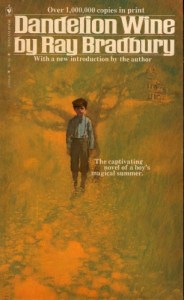
I can still feel it on my tongue, undimmed by time. Smell the sunshine in the library, know exactly where the pages sit on my childhood shelf. Taste the running and the green grass.
Some men fight for love, and make each sword swipe a sonnet. Some men fight for honor, and lay out their attacks like a stonemason sets a foundation. Some men fight for gold, holding their strength back like shiny coins saved for market.
Northmen fight to kill.
[Little snippet I wrote today, that I was pleased with.]
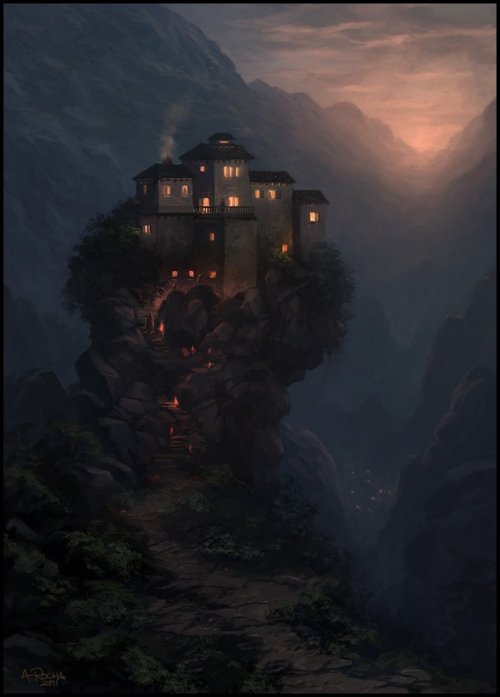
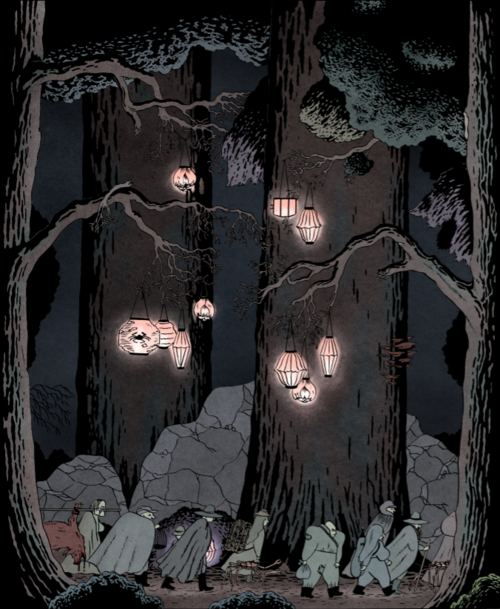
A small village, directly in the center of Riddlewood. Human settlers were first drawn to the ancient forest
Retreat by Andreas Rocha
by an accidental discovery. A traveler was camping underneath one of the ancient elms, boiling some water for soup when an acorn fell into the open pot. The traveler didn’t notice right away, and by the time he did the water had turned a brilliant shade of green. History does not tell us much about this traveler but one thing is clear – – he either had an overgrown sense of adventure, or a serious deathwish. For no apparent reason he decided to give the concoction a taste. He poured off a tiny draught of the green liquid into a dented tin tankard, and tossed it back.
He woke up several hours later, his teeth stained the color of the leaves.
This unknown traveler had just discovered the remarkable soporific effects of the Riddlewood Elm. Folk tradition contends that he spent the next several weeks finishing the emerald concoction, one sip at a time — but regardless, at some point he stumbled back to civilization and somehow convinced one of the larger merchant families to invest in his new scheme. A team of brewers, apothecaries, and loggers would make their way into the heart of Riddlewood. They would harvest the amazing acorns, determine the best way to render them safely potable and marketable, and the other, lesser trees could be cut down to make casks and barrels for the new concoction. A troop of soldiers were also included to protect against the mysterious and sly wood elves that lived in the forest.
For the first few weeks, the newly christened “Barreltown” hummed with activity. Acorns were gathered, brewed and tested. Hundreds of trees were felled to make barracks, fences, and a multitude of barrels — the saw mill ran day and night. The soldiers quickly grew bored as the wildlife of Riddlewood gave the new town a wide berth, and the wood elves were nowhere to be seen. With nothing else to do, they joined in the construction of the town, their first project a suitable saloon.
Reports vary on the events that followed, but the central theme is agreed upon by most accounts. A young soldier took to wandering the green halls of Riddlewood out of sheer boredom and restlessness. She was the youngest member of the troop, though well-trained in the ways of sword and shield.
The soldier came upon a clearing where a large red tiger lay dying, caught underneath the trunk of an oak tree that a careless logger had felled, then abandoned. Without stopping to consider the danger, she ran over to the creature and with a great cry flung herself under the tree. Arms and legs straining she pushed the felled oak up far enough that the red tiger could just barely wriggle out.
She dropped the tree in exhaustion – only then realizing that she had dropped her weapon at the clearing’s edge, and stood completely defenseless against the wounded animal.
To her surprise, the red tiger rose wearily to its feet and made no move to attack. It looked at her curiously, then padded off into the forest.
The soldier returned to Barreltown and told all who would listen about her amazing experience. A few believed her, but she was met with more than a few mocking japes. She became obsessed with proving her story, and spent much of the next few days prowling through the forest looking for tiger tracks.
Tigers, like most cats, appear when they please.
By Rui Tenreiro.
The young soldier was keeping the late watch one night, when she felt her eyes beginning to droop. She stomped her feet, and put pebbles in her shoe, but weariness stole over her. With a start, she awoke at moonfall, a bare hour before dawn, to find the red tiger sitting quite calmly on a felled tree trunk in front of her.
The red tiger stood, and walked a few paces before turning back to look at her. The intention clear, the soldier gripped the hilt of her sword closely and followed.
Through quiet clearing, and silent tree, through moon and leaf-rustle night. The guttering torchlight of Barreltown vanished behind the young soldier, and yet she continued on.
At last, the tiger stopped and turned to face her. The wind blew, and the tiger changed. A beautiful young wood elf, with hair as red as the tiger’s.
Without speaking a word, he knelt before a ragged stump of a tree and placed both hands upon it. He sang quietly, and the soldier was surprised to find tears running down her face.
Between the palms of the wood elf, and guided by his song the tree trunk began to grow. Forming and changing, shaped by his will as a potter turns the clay. A tiny barrel formed, sound and true — then with a sharp twist he broke it free and pushed it into her hands. The soldier held it up to the rising sun, and saw how well it was crafted. Sound and true, with nary a crack — better than any one in Barreltown could hope of making.
“Why would you take, what the forest would happily give?” the wood elf asked.
The soldier had no answer.
Time passed. The soldier and the wood elf spent much time in each other’s company. Love was given and returned, and the two hatched a plan.
Early one morning, the soldier and the wood elf walked into Barreltown hand in hand. They marched directly into the mess hall where all the loggers, apothecaries, brewmasters, tradesmen and soldiers ate their meals. The soldier cleared off a table and called everyone’s attention, and the wood elf plead most eloquently for the forest of Riddlewood. He finished his speech, then showed the gathered crowed how wood could be shaped and sung from the living trees, without harm.
And the people listened. They understood. And they agreed.
To the vast shock of historians throughout the world, the people of Barreltown agreed that it was a great
By Annemarie Rysz
idea. This incident is hotly contested in many scholarly circles, as it goes counter to entire schools of socio-political thought. Some even go so far as to claim the story is completely fabricated, a convenient fiction crafted by the wildly successful Riddlewood Brewing Guild.
Regardless, two hundred years later the village still remains. Barton is a reasonably prosperous hamlet, most of the residents splitting their time between farming and the seasonal work on the factory floor, brewing and bottling the various ales and liquors distilled from the trees of the forest — great casks filled to brim, tight and sound made from living wood. Only the very oldest buildings in the town show the sign of an axe or saw, the rest are all formed carefully and beautifully by the druids of Barton.
The village is roughly split between human and elven populaces, with intermarriage common. The sigil of Barton is a red tiger with a green acorn in his jaws. The village is led by Count Pel Marlowe, his family owns controlling interest in the Riddlewood Brewing Guild.
 The organized group moves through the chaotic demons. A dozen armored forms form a perimeter, holding large standards, gleaming white even in the rain with three blue swords crossed — the ancient sigil for the country of Gilead. The four-limbed vaguely female demons writhe and caper, attempting to run their bloody claws against the white banners, but they are ruthlessly crushed and pushed out of the way by the Hell Knights, their gleaming silver armor a cruel mockery of the noble Gilean paladins of old. Orange light pours from their helms, pulsing from fiendish orbs.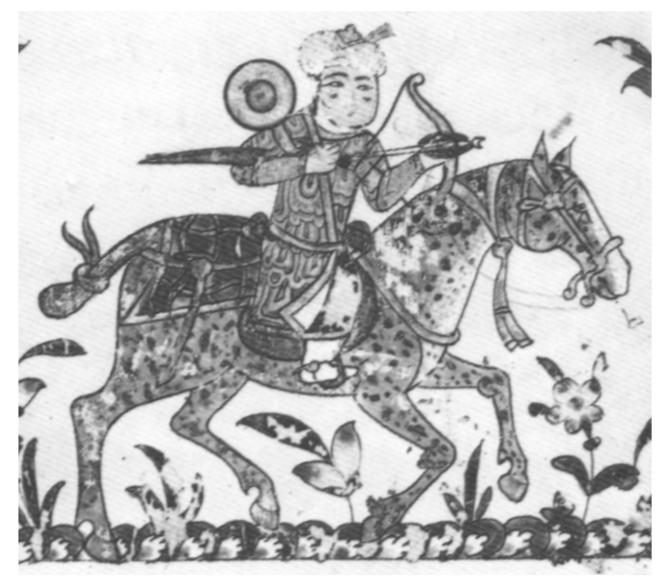




 I can still feel it on my tongue, undimmed by time. Smell the sunshine in the library, know exactly where the pages sit on my childhood shelf. Taste the running and the green grass.

 spell-sword.com