The first responses from my Alpha Draft readers are trickling in — mostly positive, but with a stern helping of jack-booted constructive criticism. I’ve already said “Well, here’s what I was going for — but oh god, you’re right. You’re absolutely right. I AM FILTH.” about seventeen times, and I’ve only heard from two readers.
I’d like to be more specific, but there’s still a lot of Alpha Drafts out there in the wild — and Science is my watchword on this process. I don’t want to pollute the other readers, gotta keep the sample clean. If I say that my readers are having problems with that centaur poetry in Chapter 11, then it’s sure to make all the other readers gaze at my sensual equine haiku with a more critical eye.
Just let yourself feel it. The rhythm, the majesty.
Let me tell you about the first time I saw Fairchild.
I was working at Papa John’s — the day shift. I had just moved back to Athens after a blurred year away, and it was the first job I found. It was terrible money, and ultimately destroyed my car at the time — but hey, free pizza.
One of the big tasks that I had to do everyday, was food prep. All of the various pizza ingredients had to be carted out of the walk-in freezer. The cheese had to be fluffed [no-shit technical term], the meats had to be sorted — and all of the vegetables needed to be prepped fresh each day. The tomatoes were chopped, the onions were diced [pure misery], everything sliced and prepped with a big steel knife.
I hated it, but in a mute sort of way. It was systematic and mindless. Plenty of time to plot my escape, or let my mind wander.
For some reason, I really did enjoy cutting up the green bell peppers.
For the uninitiated, here’s the process. You cut off the cap [stem part] with a knife, then scoop out the seeds and guts inside. Then you would toss the whole thing into a big chopper with a crank, a few spins and out would come eviscerated vegetable.
It’s hard to explain exactly what I enjoyed about it. Other than the wanton destruction. The peppers were always nice and cool, and pleasantly crisp when you sliced into them. It was neat and self-contained, a little green world — protected by a thick barrier. Chop up onions, you get more onions — chop up a green pepper, you are Galactus.
One day I cut the top off of a bell pepper, and found something new.
Fairchild.
The pepper looked completely normal on the outside, maybe just a little twisty at the bottom — but inside was a tiny green growth, a nub of another pepper growing inside. It was a much brighter green then its host, almost fluorescent green, twisted and strange growing in the center of things.
My immediate thought : “This is what cancer is.”
Because it wasn’t a blight, or a bug — it was something that grew from within the little world, innocent and merry and green, green, green. All it wanted was to grow, and was blithely unconcerned with what that meant for rest of the pepper.
I’ve scanned the internet for a good picture of one of these things, and I absolutely cannot find one suitably impressive.
This is a red pepper, but you get the idea.
It was just so pleased with itself — that’s what struck me. So vibrant and wicked and sure of itself – it almost waved in delight to be discovered.
Look what I am doing, it said. It’s so very nice inside of here, would you like to pull up a chair? Things are going so well!
That image sticks with me. And so when it was time to create a villain for the last act of Lodestar — the green, green cancer sauntered into my mind, as blithe and merry as ever. A devil, a prince of devils dreaming of being King. A trickster and a manipulator — one so very, very sure of his success. Fairchild, the King of Glass. He had appeared in bit parts in other stories, but it was time for him to take center stage.
And if the heroes of Aufero aren’t most clever and potent, he will sit on the throne of my little world until the end of days.
But even if they succeed, I know the image of the green pepper in my mind will survive — so Fairchild will too.
A short story that features my green devil – The Cost – if you care to peruse.
My beloved and our associates are driving south until we hit water. My access to the internet should be gleefully sporadic at best. I have a little bit of time before I leave, so I may queue up a few things to post while I’m gone next week — unless I get distracted or fall asleep.
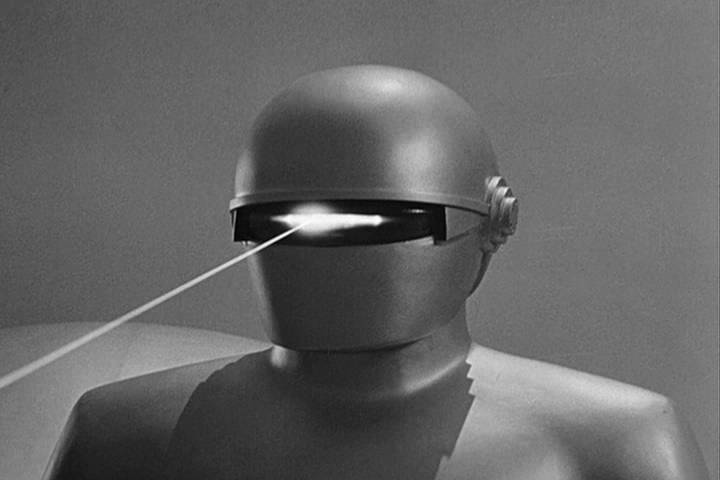
I don’t know who this guy is, but he is most displeased at my lackadaisical posting schedule of late.
But I was editing, black and white photo soldier guy, who I hope is not some sort of war criminal! I can see that ceremonial dagger on your belt, and I’m sure you’d like to dispense some pre-Internet justice, but hear me out.
In between normal life errata and work neccesity, my creative-time has been in short supply. Lodestar has taken a turn for the awesome as we rocket towards the conclusion – and I’m determined to deliver on the storytelling and gameplay promise of the campaign and not leave my players disappointed when it wraps up in September. On top of that I’m running a short side-game for some neophyte nerds in the neighborhood, plus planning for my Top Secret Next Campaign. Compounded with time rolling in the floor with the new puppy, and other general puttering about – I’ve been swamped.
I finished the rough draft of Spell/Sword back in April, then put it away for as long as possible before diving into editing. I made it a full four weeks, which was torturous indeed.
True editing began in May, here was my process:
1. Print out the draft, and read through it. Making only absolutely necessary notes in the margins.
2. Cry.
3. Read through it again, making nit-picky grammar notes.
4. Take all of the comments/edits from the paper version and add them to my Google Doc. “No argument” edits were implemented immediately. [Grammar fixes, word choice, spelling mistakes, erotic centaurs scene] More complicated edits requiring more thought or massive chapter-spanning revision entered as Comments onto the G-Doc.
5. Man, there’s a lot of these Comments. [63 total, only 17 of which were related to petticoat description. ALWAYS NEED MORE DESCRIPTION OF THE COURTLY LADY DRESSES]
6. Worked in fits and starts on the larger edits. The easy ones first, picking at the edges — then finally dived into the more serious ones in June.
7. Anxiety Quicksand. Edits seem to be making book worse. Every thing I read seems to be terrible, even if not explicitly marked for revision. I hate the book, and spend a lot of time polishing a terrible, shiny thought. Writing this draft was one of the hardest things I’ve ever done — a goal in my life that I never imagined I would accomplish. To have made it this far is nothing short of miraculous — but the book still might not be any good. Effort does not equal excellence in writing, or any art. I might have a completely unusable draft, rotten to the core. I might have written a book and still not have a book.
8. Kept editing.
9. Started to lose the feeling of forward momentum, so I engaged the Saving Grace of Art. A deadline. Contacted my Alpha Readers, and let them know that I would be printing the draft the first of July to send them copies for review. I embrace that deadline, and editing redoubles in ferocity.
10. I like the book a little better. Well, let’s be serious — I love the book, but understand that I have lost any objectivity. I’ve read it too many times, I’m way too close. I finish up major edits, with the salve that I’m going to go through this whole process again once my Alphas have a crack at it. Only they can tell me whether or not my child is a Goofus or a Gallant.
Highlights reference! These always bothered me. Maybe Goofus’ friends needed a little “tough love”, and who’s to say Gallant even liked oranges? Look at that smug S.O.B. — he probably poisoned that fruit. Yes, I was a child concerned with logical fallacies, move along.
11. I have one last brainstorm for my editing before releasing it to the Alphas. I read the entire draft out loud in one sitting. I catch innumerable grammar, tense, spelling, and logic errors in the process. Best thing I’ve done, next time around I’m planning on doing this much, much earlier. I also record me reading it [TECHNOLOGY!] for further review.
12. I like the book.
13. I send the draft to be printed for Alpha Readers. I feel a sense of pride that my closest friends and advisors will soon know how fucking clever I am.
14. I listen to the recording, and immediately catch a dozen glaring syntax and logic problems.
This sand is filled with irony!
15. Cry a little bit. But you know, in a badass way, like Chow Yun Fat in The Killer.
I know I’m not unique in my process, or in my reactions — I know my colleagues and associates are sick of my talking about these things like I invented Author Malaise. But, you’re my blog and this is my first time up this thorny path — so get prepared for some serious whining and navel-gazing.
Also, some ruminations on various literary and genre concepts. I’ve been struggling to put my novel in context with others in the genre, and I’ve had some thoughts. SOME THOUGHTS, I SAY.
I’m also thinking about pulling my old weekend STORY ON DEMAND out of mothballs, now that I have a little more brainspace to spare.
What do you think, Corporal Steely Breadcrumbs?
I’m just here for the ladies. And the oppression of the Proletariat.
I’m on schedule for finishing my Alpha Edit of Spell/Sword before July 1st — my personal printer [aka my mom] is waiting to print copies for my crack team of Alpha Readers.
Editing is like painting with sand — everything you do changes the landscape, and draws into question things that you once considered granite-bedrock of your fiction.
I’ve spent a lot of time just sparring with anxiety. Am I editing too fast, too slow? Are the changes I’m making good — are they bad? Why aren’t there more minotaurs?
I’m terrified of getting overzealous and damaging the heart of the work — I’m terrified of not doing enough and leaving cancers to grow and fester in the lines and pages of the book.
I do think it’s time to crack the door open and let some other eyes prowl over the pages. I’m restricting my Alpha Readers to 10, half male, half female — and a pretty even spread of reader-types, and writers that I respect. After they get done, and give me some feedback, and I can stop crying — I’ll get back to work on a Beta Draft for the final round of 5 readers — my toughest critics: my girlfriend, a world-renowned Shakespearean scholar, a playwright, and the cruelest douchebag I can find.
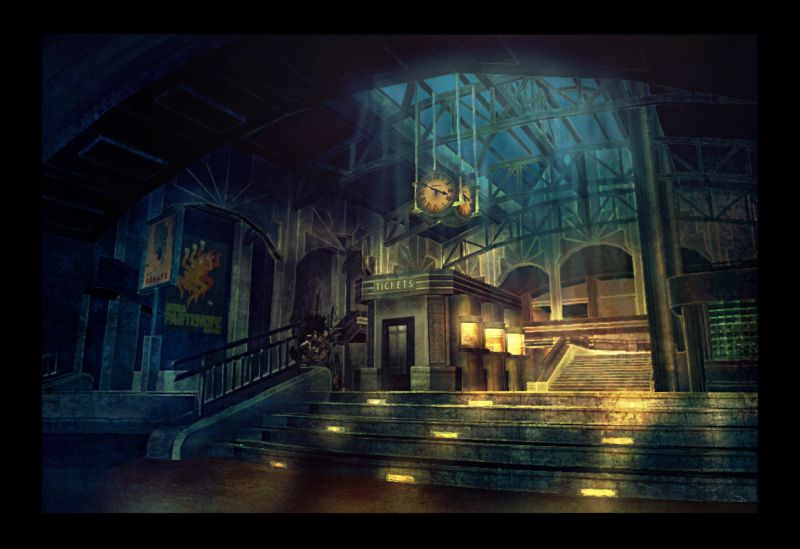
I’m in a production of Shakespeare’s Comedy of Errors, and a friend came to see the show last night. Here is the wonderfully arcane series of texts we traded. Warning: These jokes require a clear memory of the game Bioshock, as well as serious familiarity with the Bard’s text. In other words, this will be funny to no one.
Josh: I’m seeing a definite Bioshock influence in the Comedy of Errors set .Deliberate or unintentional.
Me: Sadly unintended.
Me: No gods or kings!
Josh: Is Antipholus not entitled to the sweat of his own brow?
Me: Antipholus chooses, but Dromio obeys.
Josh: Haha. Well played, sir.
Yes, we are freakish nerds. We also made jokes about sandwiches made by Determinism. Envy us.
1. I’ve been working on my very first novel. [QUIVER. CLENCH. ANXIETY-NINJAS IN MY STOMACH.] I started working in September, and completed the very, very rough draft in April.
2. I’m coming around the bend on my first round of editing. Soon I will let a few Alpha Readers take a long look, before they solemnly set fire to my manuscript and without breaking eye contact — dial the authorities.
3. While I try to stay focused on the craft itself of working on the book, I have noodled around a bit on The Next Step. The world of traditional publishing is contracting, and it’s never been known for being an easy assault for new talent — so, most of my thoughts have been centered around Self-Publishing. With resources like CreateSpace via Amazon it’s childishly simple to do, and I could have the most basic unit of my goals with a modicum of time and effort — i.e. a paper book that I slap in my mom’s hands.
4. I heart Pat Rothfuss. Name of the Wind and Wise Man’s Fear are excellent books. Wise Man’s Fear is one of the only books I can ever recall finishing …then immediately starting to read again. Slowly, languorously. I went on to read other things, but I would circle back like a honey-drunk bee to take another sip. I read that cat’s blog religious — and all of this novel nonsense is so I can send him a copy [right after my mom] and then he’ll read it and think I”m awesome and that we should be best friends and then he’ll come to my birthday party. THIS WOULD CLEARLY BE HIS REACTION TO MY WORK.
So, contextualized?
Today I read an interview he gave, linked into his own blog.
I was chuckling at his wry humor, and stroking my chin at the interesting bits — when I came to this section:
PR: Not really. Because, as I mentioned, I wanted people to read my books.
I know there’s a lot of talk about self-publishing right now. Everyone’s giddy with the possibilities. And I’ll admit that it looks good on paper: sell your books directly and keep a bigger chunk of the profit for yourself. No rejection letters. No hassle with agents. Sounds good, right?
Except nobody knows who you are. And nobody really cares. And your book is mostly crap because you haven’t had a substance-level editor give you feedback and make you revise it a couple of times. And your book is full of typos because you didn’t have a copy-editor read it. And the layout is ugly because you don’t know anything about layout…I’m sure you get the picture.
It’s like the query letter problem that I just mentioned, magnified a hundredfold. You might be good at telling a story, but that doesn’t mean you know anything about marketing. Or layout. Or editing. Or publicity. Or selling your books for foreign markets.
Even if you’re surprisingly good at one of those things, you’re still not going to be as good as a professional. You don’t know the tricks of the trade. You don’t know the right people to call. You don’t know what mistakes to avoid….
Everyone can point to a few examples of people that have done very well for themselves self-publishing. But honestly, those folks are lucky as lottery winners. They’re statistical anomalies. You want to publish with a publisher because a publisher knows how to publish a book. And you don’t. You really don’t.
Woof.
Dang.
Now, first and foremost, this isn’t about how Pat Rothfuss broke my heart, or what a big meanie-face he is, etc. etc. His beard is made of laughter and moonbeams, people. From my EXTENSIVE PERSONAL KNOWLEDGE [aka reading his blog.] he is clearly not a malicious person in any way. He was speaking from his own experience, trying to give helpful and clear advice.
It was a bit stern, and absolutist — but then, I remembered — Nerd/DM High Speech. Nerds speak in absolutes, with unwavering knowledge about whatever topic is in our demesne. It probably comes from being the smartest kid in the class, or years with our finger pointing at the small print in the Player’s Handbook. We all delight in pronouncing This is how it is. This is how it works. No, you cannot gain access to 6th level spells, just because you have a magical ability that increases your effective caster level, Carbunkle.
No, this post is about my reaction. I felt foolish.
Here is a writer and person that I respect telling me that I’m functionally wasting my time. I will self-publish my novel and it will be garbage. It will not be discovered, it will not be read. I am doing a disservice to myself and to the work itself by going this route. Pat Rothfuss told me I was an idiot.
This is not how my fanfiction plays out AT ALL.
I don’t think he’s wrong. I don’t think he’s right either.
For the vast majority of people self-publishing, he’s absolutely right. We all need to hear the stark truth like that. A wake-up call that if your goal is financial success then you are setting yourself up for failure. You are not some maverick Hemingway blazing across the firmament while thumbing your nose at traditional publishing. If you got into this gig to be the next 50 Shades of BLAHBLAHBLAH, then you are in it for the wrong reasons. Take a glance at the amount of self-published drivel on the Amazon Kindle alone. His metaphor of winning the lottery is apt. Every writer can benefit tangibly from a trained editor, copy-editor — and the inarguable expertise in marketing and layout that a publishing house can bring to bear.
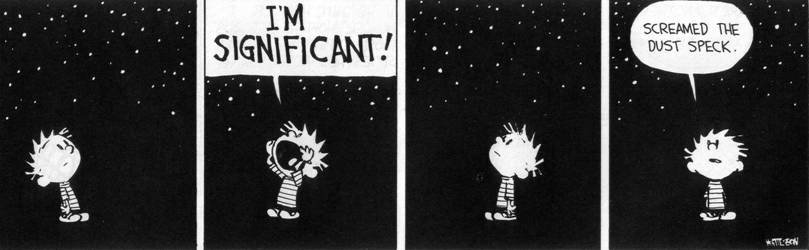
But, I’m special. SCREAMED THE SPECK OF DUST IN A TRANSPARENT ALLUSION TO THAT CALVIN AND HOBBES STRIP.
YOU KNOW, THIS ONE. [I miss Bill Watterson.]And beyond that, I do believe that traditional paper publishing is in its dotage. We’re caught in the weird wilderness between traditional and digital publishing, and all the old dinosaurs are late to the game. The tools are all laying around [editing, design, computers with blinky buttons] — what’s to stop us from selling and promoting our own work digitally direct to our audience? John Scalzi almost pioneered this concept, releasing his work chapter by chapter on the web, then backed into traditional publishing after he had already built a readership. And he’s the president of the freaking Science Fiction and Fantasy Writers of America, now!
There are more options now then ever, so more people than ever are going to chase the dream their own way. So, yeah, me too basically.
I have taken his thoughts to heart. I’ve always considered self-publishing the book as a first step, a tool to one day get picked up by a publishing house. The first book is a resume for the new job I want to have.
I hear you, Pat. I really do. But I am mercurial at best — I just can’t stay motivated with the idea of finishing the book THEN enduring two years or more of frustrating query letters, and standing like a beggar outside the big publishing houses wearing an adorable Dickensian top hat.
Well, maybe the top hat.
So, I’m sticking to my guns. Alpha Readers in July. More and more editing after that, and then when I say done I will use this fancy InterWebamaphone to put my book into people’s hands and on their fancy e-readers.
And I’m still sending you a copy, Pat. I’ll save you some cake, and a brightly colored hat.
I can still feel it on my tongue, undimmed by time. Smell the sunshine in the library, know exactly where the pages sit on my childhood shelf. Taste the running and the green grass.
 The first responses from my Alpha Draft readers are trickling in — mostly positive, but with a stern helping of jack-booted constructive criticism. I’ve already said “Well, here’s what I was going for — but oh god, you’re right. You’re absolutely right. I AM FILTH.” about seventeen times, and I’ve only heard from two readers.





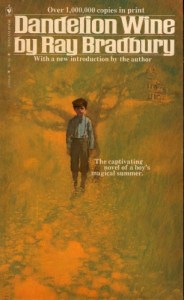 I can still feel it on my tongue, undimmed by time. Smell the sunshine in the library, know exactly where the pages sit on my childhood shelf. Taste the running and the green grass.
 spell-sword.com